


Pray for Minnesota
We recognize that our community (and our country) are in a very challenging and uncertain time. We have asked two of our ministry partners who are directly affected to share how we can love and encourage their communities in this difficult season.
As you interact with each other and with our community this week, remember that we are a people of grace, hope and love. God alone has the wisdom to heal the wounds of our community.
We love you and are praying for you and all of Minnesota.
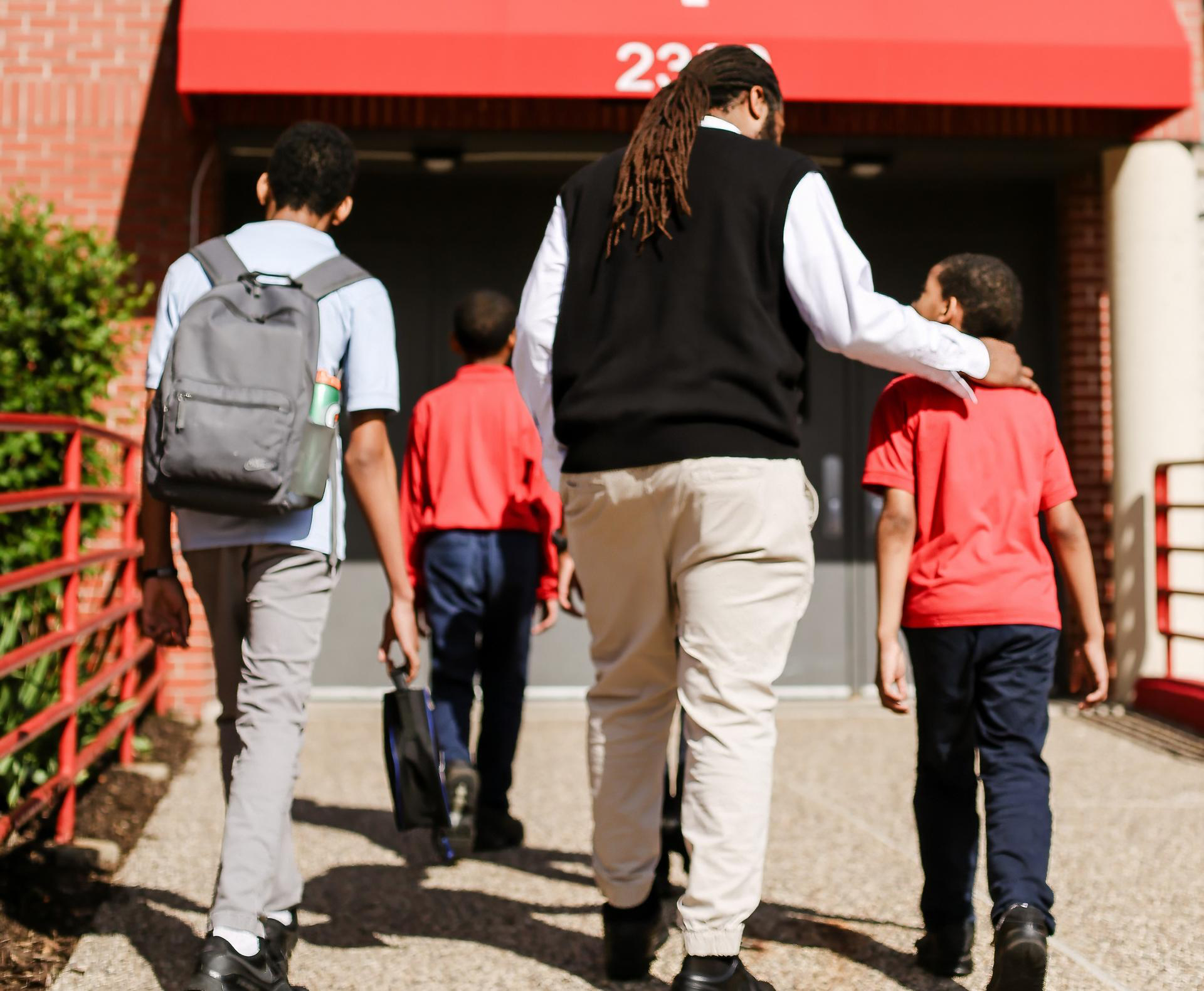
Hope Academy - a community built on God’s love
You are undoubtedly aware that this is a time of disruption and uncertainty for the people of Minneapolis, which includes our families. For some, this unsettling situation comes on top of already challenging circumstances. The Hope family is pulling together with compassion because “when one member of the body suffers, all the members suffer with it” (1 Corinthians 12:26).
Our plans are built on a commitment to our families and to promote the safety, flourishing, and learning of our students. We believe this happens best when students are surrounded by teachers and staff who care deeply for their spiritual health and academic growth—here at school. Classroom learning and deep family connections remain our primary focus.
We are exercising a moment-by-moment, radical dependence on God and His Word to guide us through this time—trusting that God’s power at work within us goes beyond all that we could ask or imagine.
If God is calling you to help encourage Hope families during this unstable time, here are three ways you may come alongside us:
- Pray. Pray that God’s peace would pervade Hope Academy so that our families, students, and teachers can focus and thrive, ensuring that education is not interrupted. Additionally, please ask the Lord to guide Hope Academy's leadership with clarity and wisdom.
- Give. Many of you already generously support our students, helping to provide them access to a remarkable, Christ-centered education. We couldn't be more grateful! However, when our students, families, or staff face challenges on a broad scale, we open our Hope and Help Crisis Relief Fund as an extra opportunity to provide short-term, emergency assistance. These funds help stabilize homes so children can remain focused on learning and staff can continue serving our mission. Every dollar goes directly toward meeting urgent needs with compassion, discernment, and wise stewardship allowing us to live out Galatians 6:2: “Bear one another’s burdens.”
- Share. Our mission to serve students and families in Minneapolis is ongoing. If you know others who care deeply about the education of inner-city youth, simply share this link: Why Give | Hope Academy
Our goal is that each member of the Hope Academy community feels loved and cared for—knowing they are not alone. Thank you for being part of this amazing family. We thank God for you.

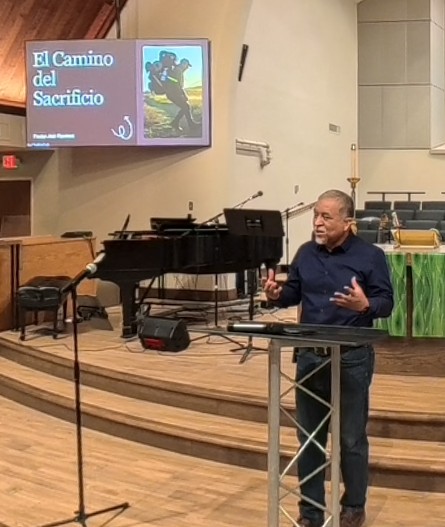
Iglesia Centro Cristiano de Minneapolis
Dear friends,
I have been deeply touched and sincerely blown away by the many messages of encouragement and compassion that have been expressed towards our church and our community. I am very grateful to them. At the same time, I want to be honest with you: I'm just a trench soldier. I do not have the ability to coordinate or fully utilize all the resources and people who have generously offered to help.
That being said, I would like to share some simple, meaningful ways you can put that compassion into action, right where you are.
One of the most powerful things you can do is meet people around you who don't look like you. Twenty years ago, walking around my neighborhood with my kids, I decided to introduce myself to the house of a Somali neighbor named Elmi, who lived just five houses down from mine. I knocked on his door, told him I was his neighbor, and he immediately recognized me and invited me in. He told me he had been a university teacher in Somalia, but had to flee the war in his country.
About ten minutes later, my wife came looking for me —Wives always know where their husbands are—. She knocked on the door, introduced herself, and was invited through, too. After some conversation, Elmi told him that she was the first "American" to visit his house. Sure, there were cable techs, inspectors and other people, but only for work. She was the first person to walk in just to meet them.
I've shared this story in many places and time again I get a similar response from white people: other immigrants have told them exactly the same thing. Being white in America is often an open door to immigrant communities. Immigrants deeply value that someone knows them, welcomes them and treats them like neighbors. Also, it is an extraordinary opportunity to share the gospel of peace through presence and relationship.
That's why my first recommendation is simple: know your neighbors. Many people have written to me from different parts of the country offering their help. I would encourage you to help starting where you are: introduce yourself to your neighbors, reach out to the pastors of immigrant churches in your area, meet the parents of your children's schoolmates. The opportunities are endless.
For those living in Minnesota, I want to recommend a pastor hispanic who is doing an amazing job providing pantries to hundreds of homes every day: Pastor Sergio Amezcua – 612-716-0273 (DHH Church).
If you want to gift pantries to the Spanish community, I recommend you buy them in Spanish stores. Although we all need to eat, we don't all have the same tastes or the same basic foods. A good friend of mine owns a supermarket and, when it's explained to him that the purchases are for donation, he usually offers a good discount, as he does with me. His name is Daniel Hernandez owner of Colonial Market – 612-483-0742.
Another important way to support the migrant community is eating at ethnic restaurants. Many of these businesses are watching their livelihood disappear, not because of lack of effort, but because their regular customers are afraid to step out. A friend of mine, Miguel, owner of the restaurant La Hacienda, shared with me that they are not only losing income, but they have also had to reduce the hours of their employees due to the lack of customers. Eating at these places is a very concrete act of solidarity.
You can also financially support the ethnic churches in your neighborhood. This past Sunday, several churches closed their doors due to the real fear that exists in their congregations, including the fear of some pastors. We decided to have our Sunday service, but the attendance was only 25% of the usual.
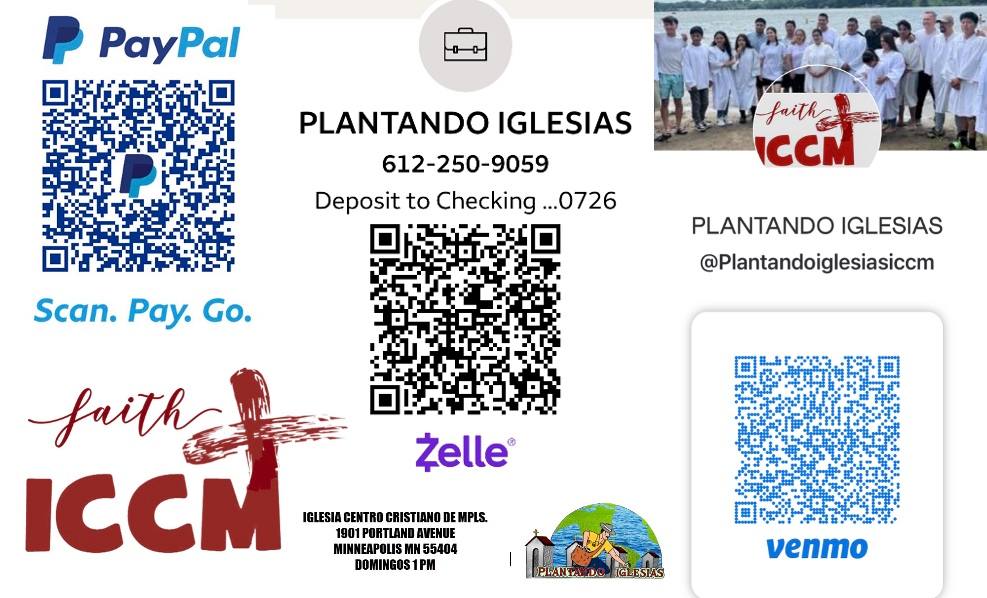
Finally, if after all this anyone still wants to support our congregation directly, I have included a picture with three ways you can give and partner with us.
Thank you so much from the bottom of my heart. May God hear every of your prayers and answer with mercy.
With gratitude and hope,
Pastor Joel Ramirez
Arrive Ministries
You are undoubtedly aware that this is a time of disruption and uncertainty for the people of Minneapolis, which includes our families. For some, this unsettling situation comes on top of already challenging circumstances. The Hope family is pulling together with compassion because “when one member of the body suffers, all the members suffer with it” (1 Corinthians 12:26).
Our plans are built on a commitment to our families and to promote the safety, flourishing, and learning of our students. We believe this happens best when students are surrounded by teachers and staff who care deeply for their spiritual health and academic growth—here at school. Classroom learning and deep family connections remain our primary focus.
We are exercising a moment-by-moment, radical dependence on God and His Word to guide us through this time—trusting that God’s power at work within us goes beyond all that we could ask or imagine.
If God is calling you to help encourage Hope families during this unstable time, here are three ways you may come alongside us:
- Pray. Pray that God’s peace would pervade Hope Academy so that our families, students, and teachers can focus and thrive, ensuring that education is not interrupted. Additionally, please ask the Lord to guide Hope Academy's leadership with clarity and wisdom.
- Give. Many of you already generously support our students, helping to provide them access to a remarkable, Christ-centered education. We couldn't be more grateful! However, when our students, families, or staff face challenges on a broad scale, we open our Hope and Help Crisis Relief Fund as an extra opportunity to provide short-term, emergency assistance. These funds help stabilize homes so children can remain focused on learning and staff can continue serving our mission. Every dollar goes directly toward meeting urgent needs with compassion, discernment, and wise stewardship allowing us to live out Galatians 6:2: “Bear one another’s burdens.”
- Share. Our mission to serve students and families in Minneapolis is ongoing. If you know others who care deeply about the education of inner-city youth, simply share this link: Why Give | Hope Academy
Our goal is that each member of the Hope Academy community feels loved and cared for—knowing they are not alone. Thank you for being part of this amazing family. We thank God for you.
Iglesia Centro Cristiano de Minneapolis
Dear friends,
I have been deeply touched and sincerely blown away by the many messages of encouragement and compassion that have been expressed towards our church and our community. I am very grateful to them. At the same time, I want to be honest with you: I'm just a trench soldier. I do not have the ability to coordinate or fully utilize all the resources and people who have generously offered to help.
That being said, I would like to share some simple, meaningful ways you can put that compassion into action, right where you are.
- For those living in Minnesota, I want to recommend a pastor hispanic who is doing an amazing job providing pantries to hundreds of homes every day: Pastor Sergio Amezcua – 612-716-0273 (DHH Church).
- If you want to gift pantries to the Spanish community, I recommend you buy them in Spanish stores. Although we all need to eat, we don't all have the same tastes or the same basic foods. A good friend of mine owns a supermarket and, when it's explained to him that the purchases are for donation, he usually offers a good discount, as he does with me. His name is Daniel Hernandez owner of Colonial Market – 612-483-0742.
- Another important way to support the migrant community is eating at ethnic restaurants. Many of these businesses are watching their livelihood disappear, not because of lack of effort, but because their regular customers are afraid to step out. A friend of mine, Miguel, owner of the restaurant La Hacienda, shared with me that they are not only losing income, but they have also had to reduce the hours of their employees due to the lack of customers. Eating at these places is a very concrete act of solidarity.
- You can also financially support the ethnic churches in your neighborhood. This past Sunday, several churches closed their doors due to the real fear that exists in their congregations, including the fear of some pastors. We decided to have our Sunday service, but the attendance was only 25% of the usual.
- Finally, if after all this anyone still wants to support our congregation directly, I have included a picture with three ways you can give and partner with us.
------------------
Here also are Pastor Joel’s notes from the Stand Together faith leaders’ gathering on February 11:
1) The challenge for the Church is long-term presence, not short-term reaction.
In moments of crisis, it is easy for churches to mobilize quickly with emergency responses. However, what immigrant families will need is not a burst of activity for a few days, but a steady, faithful presence for months and even years. The real ministry begins after the urgency fades.
2) Trust will not return because fear ends. Trust returns because presence remains.
Fear may decrease over time, but trust is not rebuilt automatically. Trust grows when people see that we are still there—still visiting, still calling, still caring—long after the initial crisis has passed.
3) Trust will be rebuilt when churches stay after the headlines are gone.
When media attention moves on, families are often left alone with the consequences of trauma. If the Church remains when no one else is watching, that is when credibility and trust are restored.
4) Pastors need to learn not what to preach, but how to listen—without correcting, advising, or preaching.
In seasons of trauma, people do not first need sermons; they need space to be heard. Listening without trying to fix, correct, or instruct becomes a powerful pastoral act of healing.
5) Meals for months, not only for days.
Practical support must be sustained. Families will struggle with income loss, instability, and emotional exhaustion for a long time. Consistent provision communicates love in a language everyone understands.
6) The real crisis will begin when the news cameras leave. Because the fear will remain, the trauma will remain, and the church will be the only institution still standing in their lives.
Public attention is temporary, but the emotional and social consequences are not. When systems disappear, the Church often becomes the last and only support structure families can rely on.
7) This is not a moment for the church to do something. This is a moment for the church to become something — a long-term refuge for wounded immigrant families.
This is about identity, not activity. The Church is being invited to embody refuge, stability, and hope as part of who we are, not just what we do.
8.) Immigrant families will not remember what churches posted or what churches said. They will remember who visited, who stayed, and who walked with them for months after everyone else moved on. Trust is rebuilt at the speed of presence.
Social media posts and public statements are quickly forgotten. Personal presence, consistent companionship, and quiet faithfulness are what leave lasting impact.
Thank you for your attention, and even more, for your willingness to walk alongside the weary, to give drink to the thirsty, food to the hungry, and shelter to those who may be at risk of losing their homes.
With gratitude and hope,
Joel Ramirez


Copyright 2026 Oak Haven Church
All Rights Reserved.